
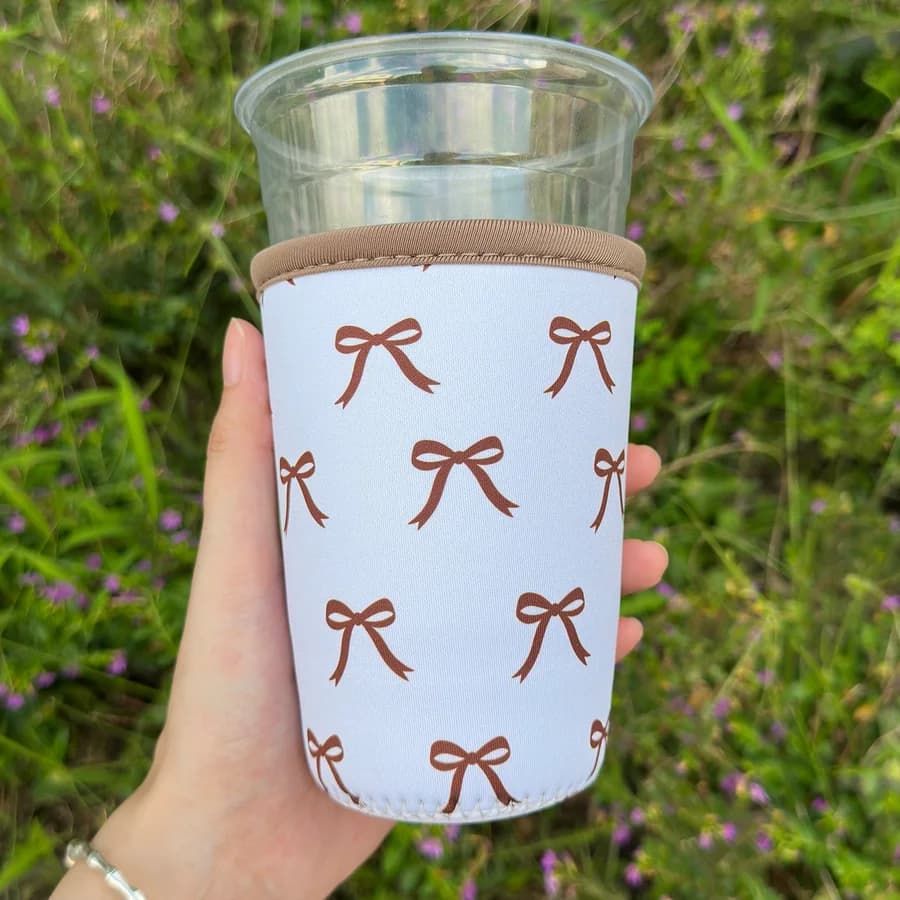
Start with the standard closed-bottom coffee sleeve: it has neither a handle nor a shoulder strap and is EDIOM's most frequently purchased style. There are five construction styles, with colors and prints chosen separately. The four closed-bottom styles come in Small, Medium, and Large; the bottomless style has one combined Small/Medium size plus Large.
Five coffee sleeve styles at a glance
These are five documented constructions. Listing their features separately does not establish that every bottom, handle, and strap combination is available.
| Construction style | Distinguishing feature | Size options |
|---|---|---|
| Standard closed-bottom | Covered base; no handle or shoulder strap | Small, Medium, Large |
| Bottomless (open-bottom) | Exposed cup base; shorter sleeve body | Small/Medium (one combined size), Large |
| Closed-bottom with shoulder strap | Covered base with a shoulder strap | Small, Medium, Large |
| Closed-bottom with bound handle | Covered base; added handle-edge binding | Small, Medium, Large |
| Closed-bottom with unbound handle | Covered base; no added handle-edge binding | Small, Medium, Large |
Choose by coverage and carrying method
Standard closed-bottom
Consider this style when you want material beneath the cup without a handle or shoulder strap. Check how the covered base sits on a level surface. A closed bottom does not establish leak containment.
Bottomless (open-bottom)
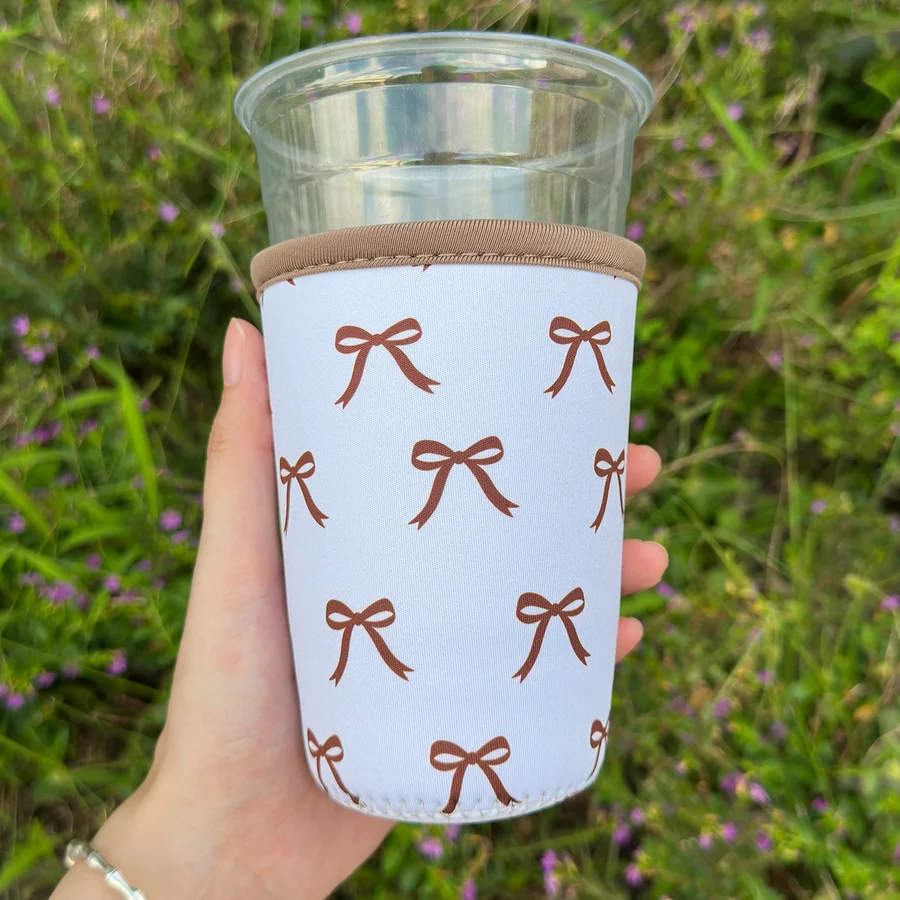
The current bottomless coffee sleeve has a shorter body and leaves the cup base exposed. Small/Medium is one combined size, not separate Small and Medium options. Confirm this style’s dimensions with the supplier rather than estimating from a photograph or using the closed-bottom size chart.
Closed-bottom with shoulder strap
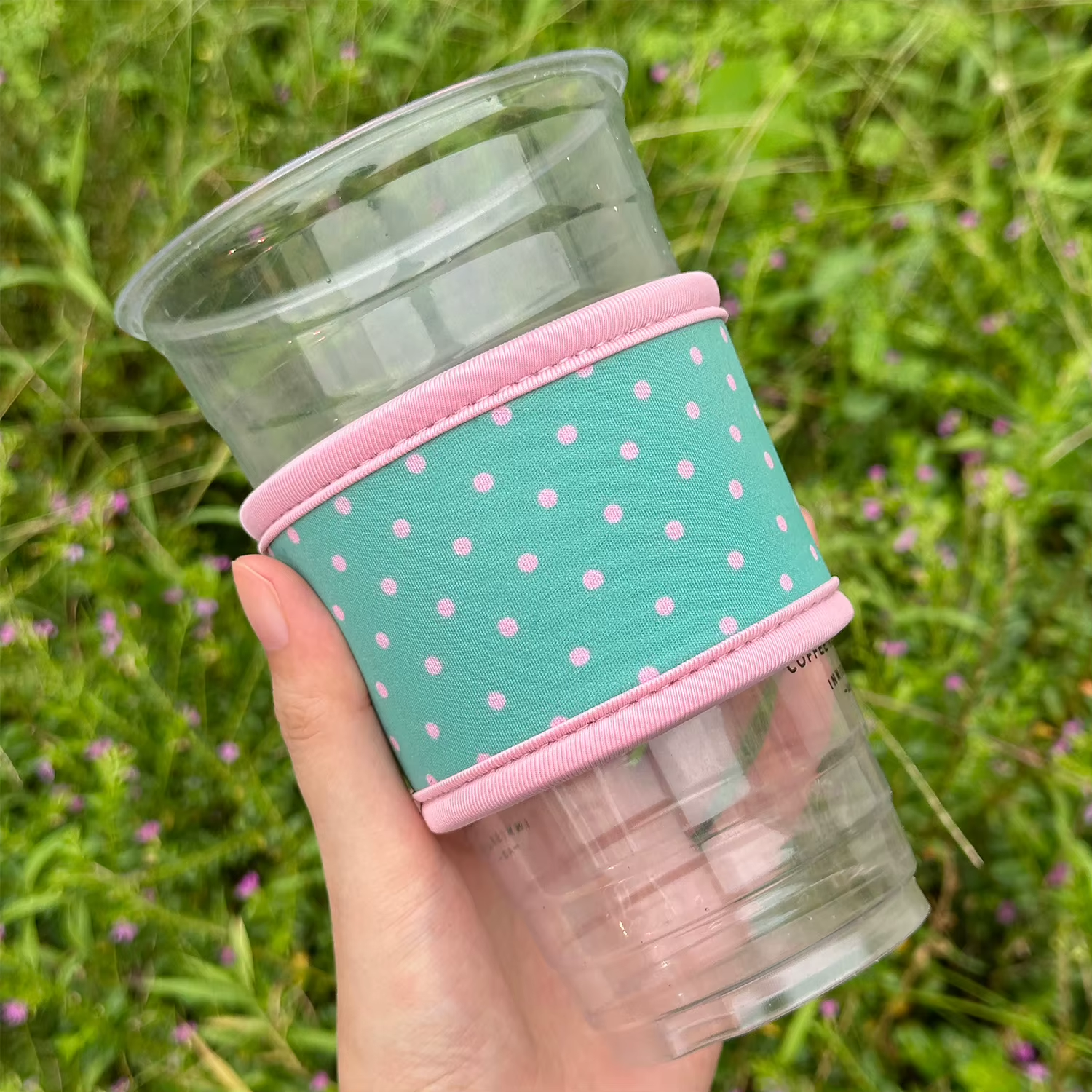
Consider this style for intended shoulder carrying. Confirm the strap's attachment arrangement on the sample, then check how the cup hangs and whether the strap obstructs access to the lid.
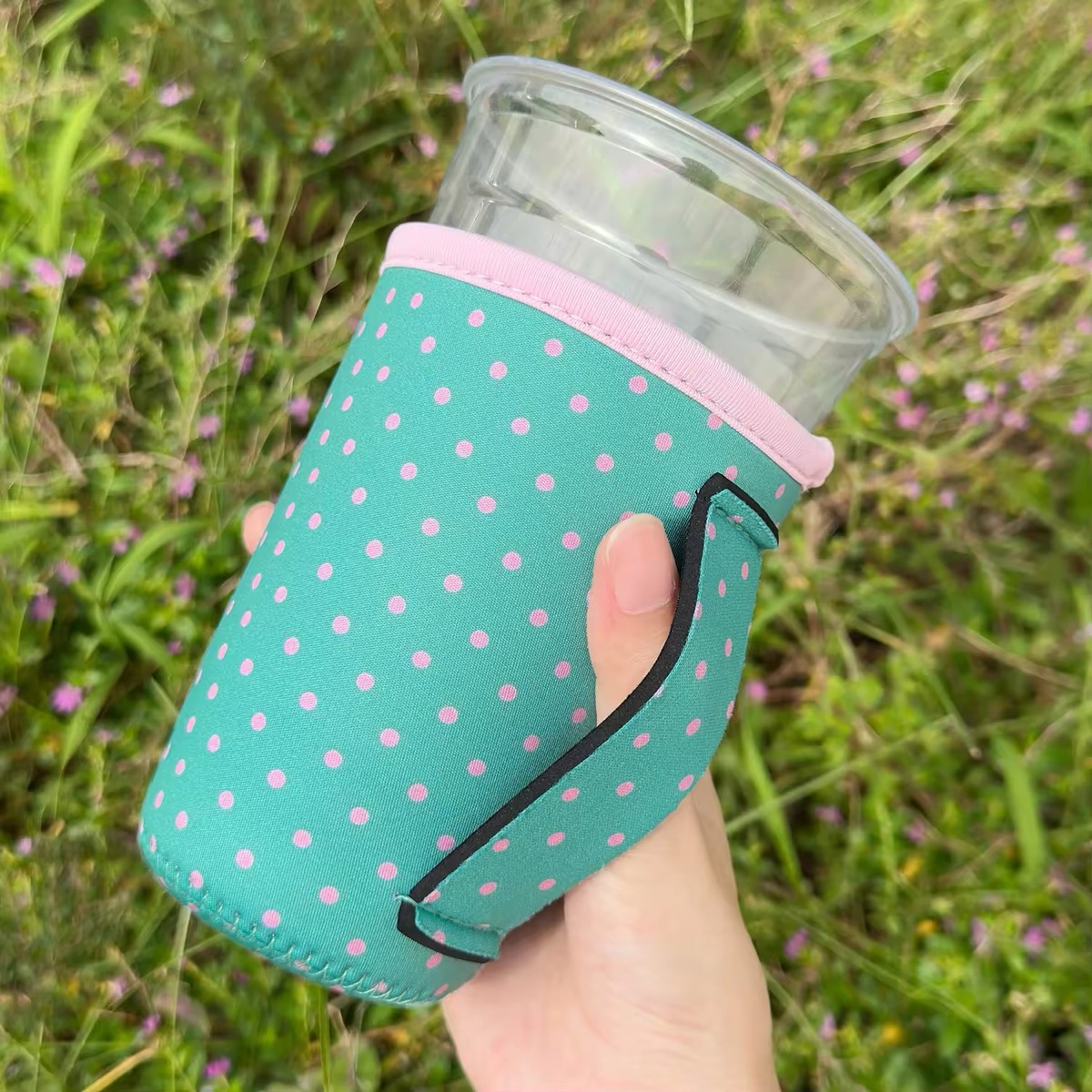
Closed-bottom with bound handle
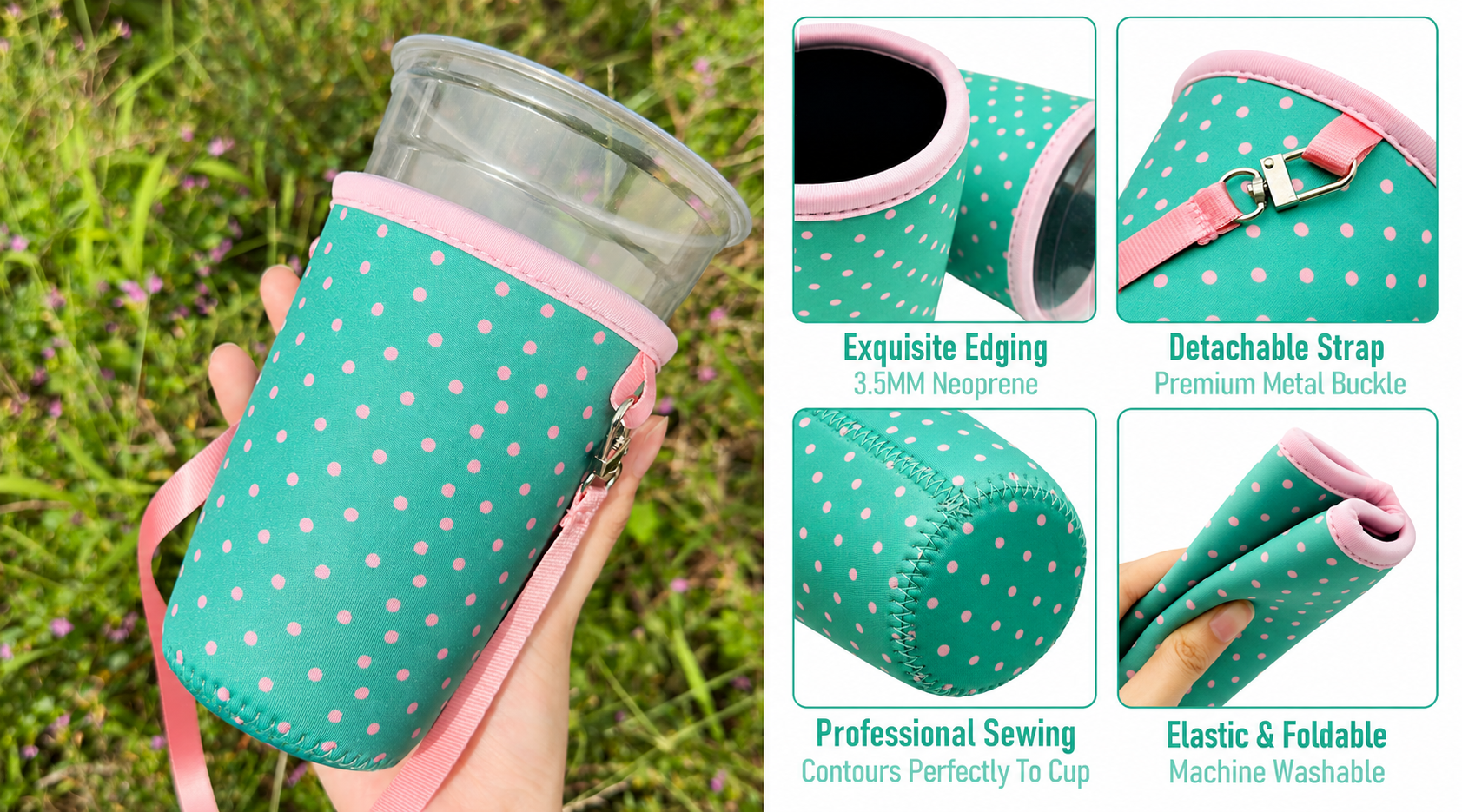
This style adds binding around the handle edge. Choose it for the preferred edge appearance, then inspect the binding, finger space, and attachment areas. Binding is not a verified strength grade or proof of greater carrying capacity.
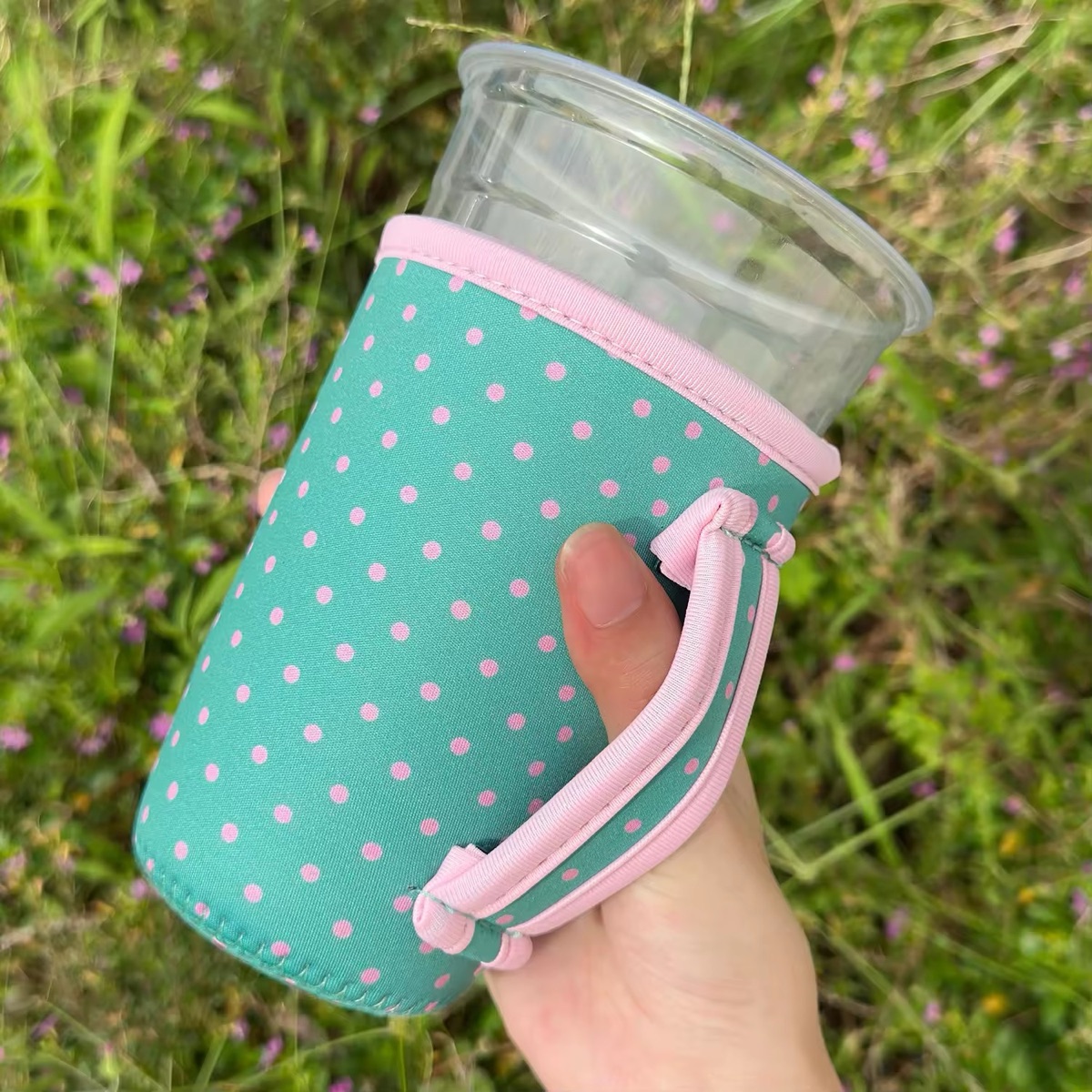
Closed-bottom with unbound handle
This style has no added handle-edge binding. Compare edge pressure and grip comfort with a bound-handle sample using the same cup and fill level. The absence of binding does not establish lower strength.
Coffee sleeve size guide: four closed-bottom styles
This shared chart applies to all four closed-bottom styles, not the bottomless style. These dimensions and capacities are chart references, not sample test results or manufacturing tolerances.
| Size | Sleeve height | Sleeve bottom diameter | Reference cup capacity |
|---|---|---|---|
| Small (S) | 10.5 cm | 6.3 cm | 16–18 oz |
| Medium (M) | 13 cm | 6.5 cm | 22–24 oz |
| Large (L) | 15 cm | 6.8 cm | 32 oz |
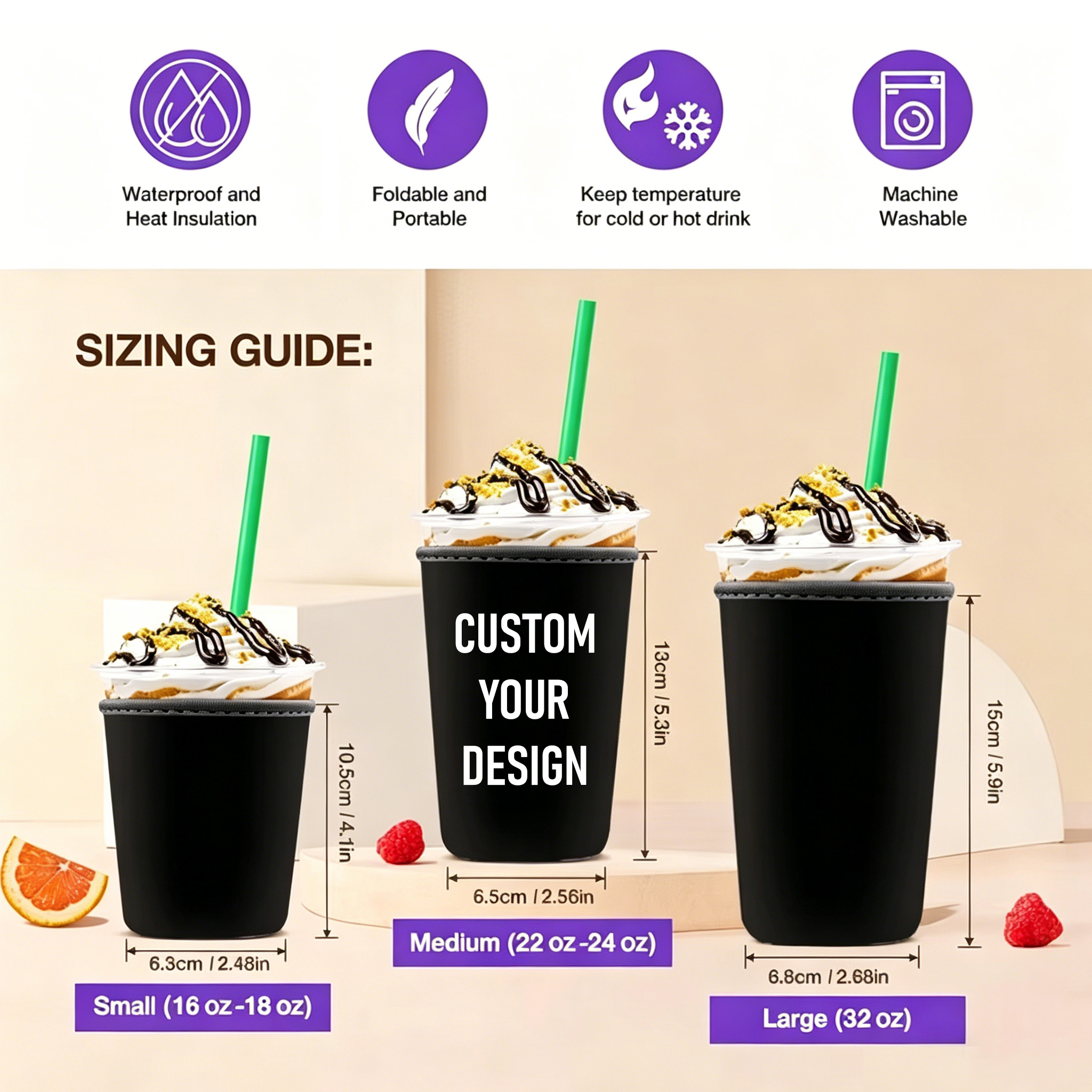
Capacity alone does not guarantee cup-profile fit. Make the final selection with the actual cup, its lid, and a physical sample of the selected construction and size.
What should you check on a sample?
Neoprene coffee sleeves are suitable for both cold and hot drinks. The insulating layer helps keep cold drinks cool and hot drinks warm, while reducing heat transfer from a hot cup to your hand.
Record the selected style, size, actual cup and lid, intended contents, and fill level before reviewing the sample.
- Confirm the construction and size; note any mismatch before assessing fit.
- Insert and remove the cup with its lid fitted. Check sleeve position, finger clearance, and whether either movement disturbs the lid.
- Set the cup on a level surface. Look for rocking, material bunching beneath it, or a lower edge that prevents normal placement.
- Check carrying stability and grip comfort for the intended cold- or hot-drink use at an agreed fill level. Make short, controlled movements; stop if the cup slips, tilts unexpectedly, or a connection opens.
- Inspect any handle or strap connections before and after. Record visible changes, grip discomfort, and cup movement, along with revisions needed.
These are suggested fit and usability observations, not a carrying load rating. Resolve any remaining fit or connection concerns and agree on further evaluation needed before approving the construction.
For the documented product options, see the coffee sleeve product reference.