
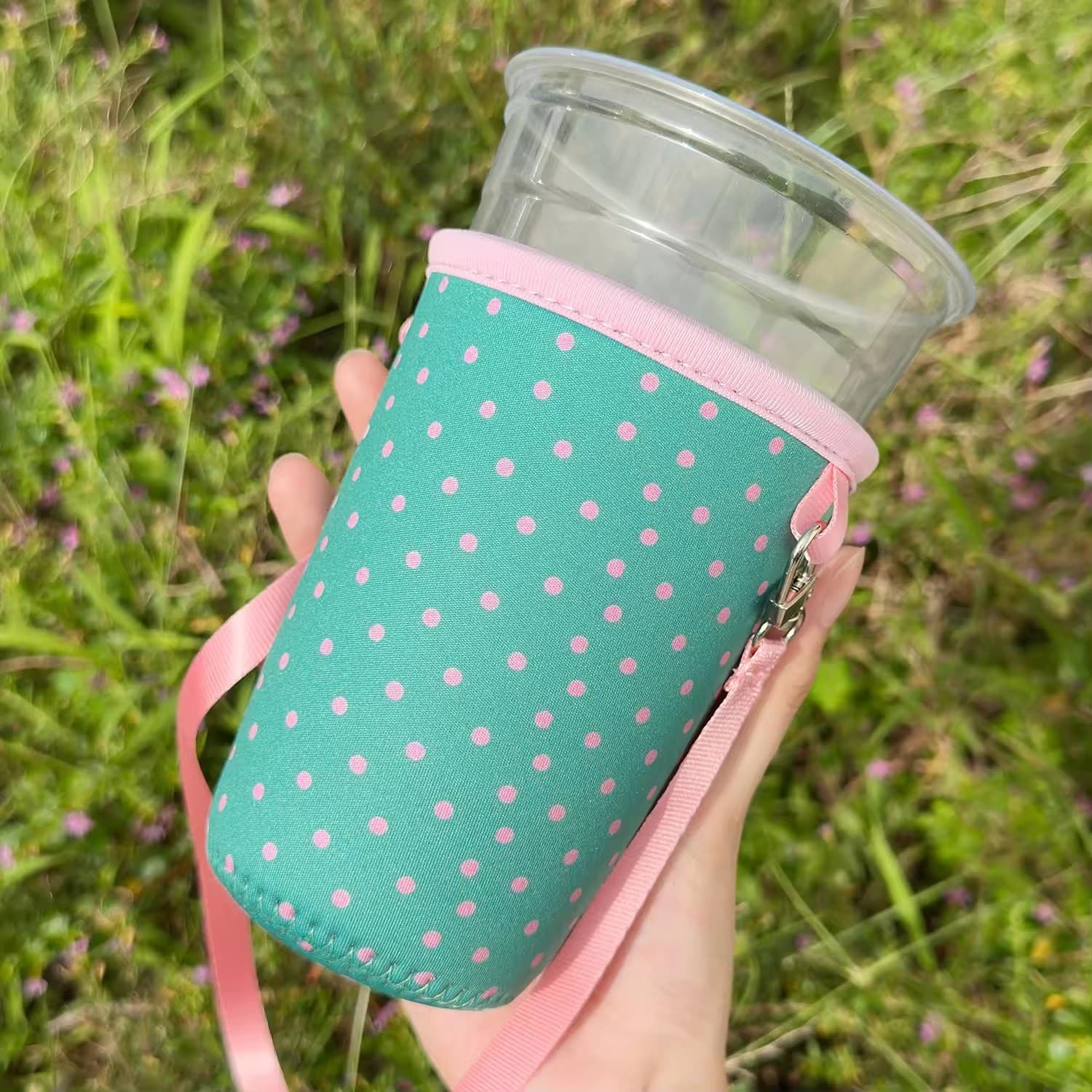
Example of a coffee sleeve with a shoulder strap.
Thinking about selling coffee sleeves, but not sure which style or size to start with? Or perhaps you already sell them and want to develop your own designs?
You do not have to make every decision at once. You might inspect a few ready-stock sleeves, discuss a small test of your own design, or prepare a regular custom order. Each path answers a different question and has its own quantity, sample, cost and delivery considerations.
This guide brings together practical questions from coffee sleeve orders. It is designed to help you decide what to check first, what to ask a supplier and what to confirm before production—whether you are testing a new product or planning your next collection.
1. Which coffee sleeve buying path is right for you?
Start with the decision you need to make now. Are you checking whether the material and size suit your product? Trying existing designs with your audience? Or ready to order a collection with your own artwork?
| What you want to do | A possible starting path | Check first |
|---|---|---|
| Inspect quality or test existing designs | Ready-stock coffee sleeves | Available styles, designs, sizes, price and shipping |
| Try your own design without committing to a regular quantity | Discuss a small custom test | Artwork, each design and size, feasible quantity, sample and quote |
| Place a planned custom order | Regular custom production | Specifications, MOQ by combination, artwork approval, sample scope and schedule |
If you already have experience selling coffee sleeves, you may know your preferred construction and sizes. In that case, focus on what is changing in this order: the artwork, background color, material, packaging or delivery plan. If this is your first test, a physical sample can help you make those choices with more confidence.
2. How do you choose a coffee sleeve style?
The best starting style depends on the cup and the way your customers will use it. A standard closed-bottom sleeve covers the base without a handle or shoulder strap. A bottomless style leaves the base exposed. Handle and shoulder-strap styles add different ways to carry the cup. Colors and prints are separate decisions from the construction.
Look at the target cup and lid, how much of the cup the sleeve should cover, and whether the customer needs a handle or strap. On a physical sample, check where the sleeve sits, how the bottom supports the cup when applicable, and whether any handle or strap feels suitable for the intended use. A covered bottom alone does not establish that a sleeve is leakproof.
If you are unsure which construction fits your audience, consider comparing a few different styles before selecting a larger assortment. If you already know your customers' preferences, tell the supplier which details must stay the same and which can be adjusted. Availability and construction combinations should be confirmed for the actual project.
3. How do you choose the right size?
A cup's stated capacity is a useful starting point, but cups with the same capacity can have different shapes. Check the actual cup profile, lid and dimensions at the points where the sleeve will sit. A matching physical sample lets you see how the cup fits and feels in use. Size names alone should not be treated as a guarantee of fit.
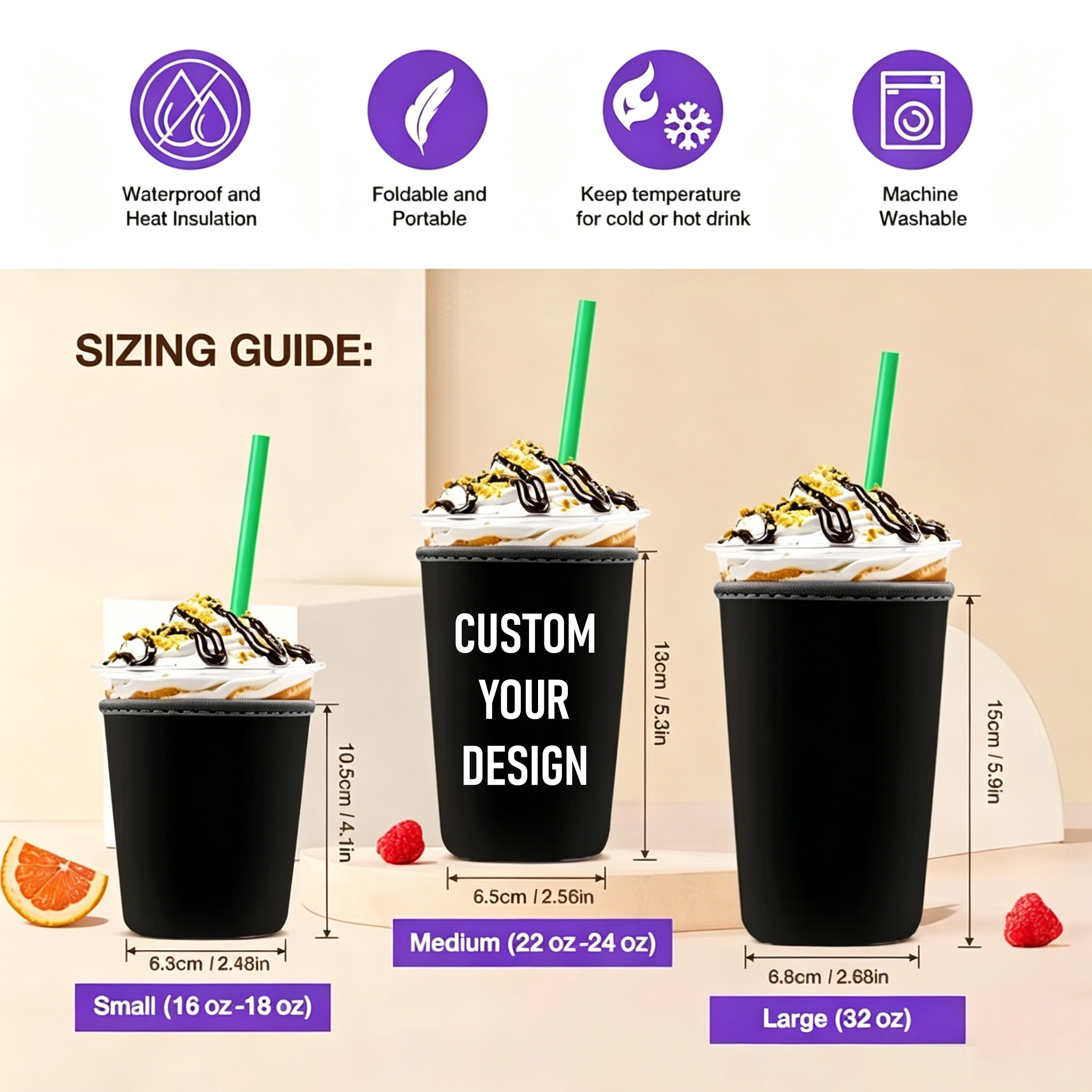
At EDIOM, Godfrey's observations of our own orders suggest the following size preferences for different constructions:
| Coffee sleeve construction | Observed order preference |
|---|---|
| Standard style without a handle or strap | Medium > Small > Large |
| Handle style | Large > Medium |
| Strap style | Small > Medium |
These are observations from our customer orders, not a market-wide sales study or a promise about what will sell in your store. Godfrey's observations of standard and handle styles come mainly from US customer orders; the strap-style observations mainly involve customers in Dubai, the Middle East and Japan. Customers and markets differ; the remaining size order for the handle and strap styles has not been established here. Use your cup, your own customer feedback and a sample to make the final decision.
Also check how a particular construction defines its sizes. For example, the current documented bottomless style uses one combined Small/Medium option and a Large option, while the documented closed-bottom styles use S, M and L. Confirm current availability and dimensions rather than assuming the same size chart applies to every structure.
4. Can you test coffee sleeves with ready stock?
If you want to inspect quality or try existing designs before placing a custom order, EDIOM has ready-stock coffee sleeves in selected styles, designs and sizes. You can order from one piece and mix available options. Ask which combinations are in stock, together with their prices and shipping arrangements.
Because ready stock is already made, it does not need another production run. Same-day payment and dispatch can be arranged for available stock; confirm the particular order and dispatch arrangements. You might choose more than one size or construction to check material, sewing and cup fit, or select existing designs to test with your customers.
Our stock samples normally use the same materials, sizes and standard processes as our regular custom sleeves. When a stock sleeve matches your intended custom product's material, thickness, size, construction and process, it can give you a useful understanding of its feel, fit and workmanship. If you want a different material, thickness, size or process, discuss how that difference will be checked. A stock sample cannot show the final print of your own artwork.
Ready stock is sold as it is. Adding your logo, a woven label or another modification requires a custom order; it cannot be added to the stock item as a ready-stock adjustment.
5. What can you customize on a coffee sleeve?
Depending on the project, buyers may request their own original pattern, printed logo or woven label, and may discuss an exclusive construction or changes to a style. Confirm feasibility, material, size and process with the supplier before treating any proposed feature as final.
If you already have artwork, an editable vector file such as AI or PDF is useful. A high-resolution JPG or PNG can also be reviewed. Let the designer know the intended placement, scale, colors and file version; a seamless repeat can make an all-over pattern easier to lay out.
If you only have a logo, reference image or idea, you can still start the conversation. We can try to help arrange the artwork or explore a concept with AI assistance, then review whether it can be prepared for production. Please use designs, logos and references you have the right to use. A visual concept is a starting point; the production file and sample still need confirmation.
Can you see a woven label before paying for your own label sample?
If you want to inspect label material and workmanship before committing to a custom woven-label sample, ask whether we can include one of EDIOM's own labels separately with your sample. It is not sewn onto the ready-stock sleeve. The example helps you see the label material and workmanship; it does not show your own logo, final label dimensions, colors or sewing position. Availability and any charges are confirmed when arranging the sample.
6. How do MOQ and small-batch testing work?
For regular, simple custom coffee sleeves at EDIOM, the usual starting MOQ is 100 pieces per design per size. Different background colors count as different designs. Special materials, accessories or complex construction may require a separate review.
For example, suppose you want the same artwork on black and pink backgrounds, each in Small and Medium. Under the regular starting rule, the four requested combinations are counted separately:
| Artwork | Background | Size | Regular starting quantity |
|---|---|---|---|
| Same artwork | Black | Small | 100 |
| Same artwork | Black | Medium | 100 |
| Same artwork | Pink | Small | 100 |
| Same artwork | Pink | Medium | 100 |
| Illustrative total | 400 |
This is a planning example, not a quote. You do not have to order an unwanted combination: the point is to make the quantity for each selected combination clear.
If you are testing a market or working with us for the first time and need fewer pieces, share the designs, sizes and quantities you have in mind. We can discuss whether a smaller custom test is practical for the particular project. Small quantities still involve preparation, labor and management, so the unit price may be higher than for a regular order. The goal is to agree on a workable balance; there is no fixed surcharge promised in this guide.
7. How are artwork and samples confirmed before production?
Knowing what happens between sending an idea and starting bulk production can make the process easier to manage:
- Discuss the style, cup, sizes, design and required quantity.
- Prepare the print file and share it for your review; identify and correct any issues.
- After the file is confirmed, make the agreed sample or samples.
- Review the samples through photos or video, and request adjustments where needed.
- Once the required samples and details are confirmed, arrange bulk production.
Before a formal order is confirmed, a buyer who wants to check quality may discuss making samples for a few selected designs or sizes. Once a formal order is confirmed, if pre-production samples are required, we normally make a sample for each design and each size, photograph every combination and send the photos to the buyer for individual confirmation before bulk production. The actual sample scope is agreed for the project.
When reviewing, check the artwork version, print size and position, color, top binding, sewing, construction and the identity of each design-size combination. Keep corrections together and confirm which revised version will be used. Photos and videos help you check visible details remotely; if you need to assess hand feel, actual cup fit, or use samples for photography, discuss having physical samples sent to you. The contents of the sample shipment are agreed together.
8. What costs should you confirm before ordering?
A useful quote separates the product price from sample, process and shipping charges. Ask what is included for your particular design and quantity rather than assuming that one number covers every step.
Before a formal order is confirmed, physical sample charges and shipping are usually paid by the customer; confirm the amount and contents in advance. Once the order is confirmed, EDIOM's pre-production samples are usually made without a separate sample fee. PVC logo patches, woven labels or screen printing may involve mold, screen or related charges depending on the project. If those charges are already included in the confirmed order, they are not charged again for sampling.
For regular sublimation, such mold or screen charges are generally not needed and pre-production samples are usually free. Ask the supplier to identify any sample, setup, packaging and shipping charges for your order. A free sample does not automatically mean every other service or delivery cost is free.
9. Can coffee sleeve orders be shipped DDP?
If you are unfamiliar with import clearance, it is reasonable to want a clear delivery plan before you order. For many destinations, EDIOM can discuss an air or sea DDP delivery service, subject to the destination, route and shipment. The confirmed quote should state the agreed delivery address and what is included for customs clearance, import duties, taxes and delivery.
Under the agreed DDP service and quote, the included clearance, import charges and delivery are arranged as specified, so you can understand the agreed cost before shipment. Confirm the terms in writing, including how any tariff changes after the quote is accepted and any charges outside its stated scope will be handled. Some shipments may require information from the buyer for clearance. Availability and the exact service should be confirmed for each order.
For shipments to the United States, Godfrey's usual transport estimates are:
| DDP service | Usual time from dispatch from EDIOM to delivery to the customer |
|---|---|
| Air shipment with local delivery | About 10–12 working days |
| Sea shipment with local delivery | About 20–30 working days |
These are estimates, not guaranteed delivery dates, and they do not include artwork approval, sampling or production before dispatch. Customs inspection can extend delivery time; the additional time depends on the inspection. Confirm the route, destination, available service, quote and current timing for the shipment before ordering. Other destinations and sample parcels may use different services and timelines.
10. How do you choose a coffee sleeve supplier?
You do not need to become a manufacturing expert before asking useful questions. A suitable supplier should help make the project clearer and explain where decisions are still open. Consider asking:
- What information do you need to confirm the intended cup fit, style and size?
- How do you count design, background color and size for MOQ?
- Which stock or custom samples are available, and what can each sample check?
- How are artwork versions, changes and each design-size sample confirmed?
- Which sample, tooling, packaging, freight and import charges are included?
- When do production and transport estimates start, and what might change them?
- How are questions after delivery and details for a repeat order handled?
Compare answers against the same project requirements. A clear record of what is included and what remains undecided is often more useful than comparing a unit price alone. Choose the supplier and process that fit your own product, timing and business needs.
11. What should you review after your first test?
After checking samples or selling an initial batch, record the styles, designs and sizes you tested, the cups they were intended to fit, customer feedback and the inventory you have left. Use your own results to decide which combinations to repeat or adjust; one seller's experience does not guarantee another's results.
For a repeat or expanded order, keep the approved artwork version, sample photos, agreed materials and construction, quantities by combination, packaging and any changes together. This helps the next order start from decisions already made while leaving room to improve the product for your customers.
Frequently asked questions
Can I order one ready-stock coffee sleeve to check quality?
Yes, subject to availability. EDIOM ready-stock coffee sleeves start at one piece. You can mix available designs, styles and sizes; confirm current stock, price and shipping.
Can I mix different ready-stock designs and sizes?
Yes. Available designs, styles and sizes can be mixed, starting from one piece. The options and quantities depend on current inventory; ask for the available selection before ordering.
Can I add my logo to a ready-stock coffee sleeve?
No. Ready stock is sold in its existing state. Your own logo, woven label or another change requires a custom project. You can ask whether a separate EDIOM woven-label example can be included with a sample to inspect its material and workmanship.
Do I need finished artwork before contacting a supplier?
No. You can begin with your own logo, reference or idea and discuss the design. An editable file is helpful when available. The design's usage rights, production file and final appearance still need to be confirmed.
What is the MOQ for custom coffee sleeves?
EDIOM's usual starting point for regular, simple custom coffee sleeves is 100 pieces per design per size; different background colors count as different designs. Special constructions or materials need review, and a smaller test may be discussed case by case.
Can I order fewer pieces to test my own design?
You can discuss your designs, sizes and target quantities. Whether a smaller custom order is practical, and what it will cost, depends on the project and must be agreed in advance.
Will every design and size be sampled before production?
Once an order is confirmed, if pre-production samples are required, EDIOM normally makes and photographs each design-size combination for individual buyer confirmation. Before an order is confirmed, a few selected combinations can be discussed to check quality and details.
Can I see a woven label before ordering my own?
Ask whether an EDIOM woven-label example can be included separately with your sample. It helps you inspect material and workmanship, but it is not sewn onto the ready-stock sleeve and does not show your custom logo or final label details.
Can my coffee sleeve order be shipped DDP to the United States?
Air or sea DDP delivery may be available depending on the route, shipment and destination. Confirm the written quote, included clearance and taxes, delivery address and current estimated timing before ordering. Usual US transport estimates are about 10–12 working days by air and 20–30 working days by sea from dispatch to delivery, subject to the conditions described above.
A practical next step
Start with the question you need answered: do you want to inspect a ready-stock sleeve, compare a few sizes, discuss your own design, or plan an established collection? Bring the target cup information, your current idea and the quantity you have in mind. Unknown details can be discussed; they do not need to be guessed in advance.
Editorial note: The EDIOM-specific practices and observations in this guide reflect its order experience and are subject to confirmation for the project. They do not guarantee fit, sales, a quotation or delivery for a particular order.