
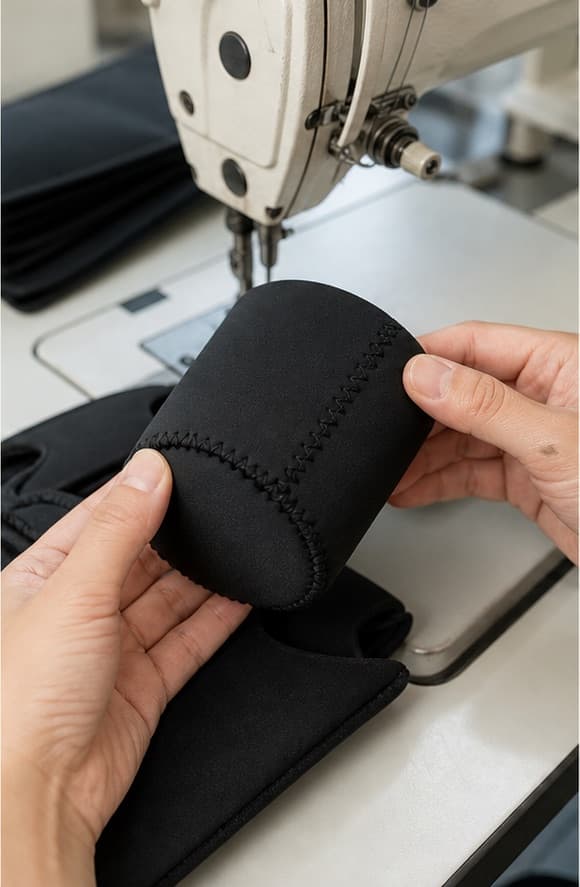
Short answer: source custom neoprene drink sleeves as a controlled product-development project, not as a catalog-price purchase. Define the container, construction, material, size, artwork, printing, quantity per design and size, packaging, delivery date, and destination. Compare suppliers on the same specification, approve a physical sample, document quality criteria, and confirm the production and shipping plan before paying for bulk production.
Can coolers, iced coffee sleeves, bottle sleeves, and tumbler sleeves are visually simple products. That simplicity can create a false sense that suppliers are interchangeable. In reality, the buyer is coordinating a chain of decisions: foam and face fabric, stretch and fit, pattern, print method, color, cutting, seams, base construction, accessories, packaging, carton loading, inspection, and export timing. A low quotation can become expensive when any of those assumptions differ.
This guide is written for promotional-product distributors, beverage brands, e-commerce companies, private-label programs, cafés, events, and importers buying made-to-order sleeves. It follows the sequence used in practical custom development: brief, feasibility, quotation, sample, approval, bulk production, inspection, and delivery. It does not replace a project-specific contract, compliance review, or inspection plan.
Step 1: define the commercial job before the product
Begin with why the sleeve exists. A high-volume event giveaway prioritizes fast distribution, packing efficiency, and a clear logo. A brewery retail program may prioritize shelf presentation, repeat use, and brand color. A private-label e-commerce product may require individual packaging, barcodes, variant control, and stronger photography. A café sleeve needs the exact cold-cup profile and comfortable handling. The same material category can produce different specifications because the business job is different.
Write a one-paragraph project intent before contacting suppliers. Identify the buyer, end user, sales channel, target container, expected order scale, destination market, and non-negotiable result. This gives the supplier context for recommending construction without turning the enquiry into a retail-style menu of unrelated options.
Step 2: create a quotation-ready specification
A quotation is only comparable when every supplier prices the same product. Use the following fields as the minimum specification framework:
- Product type: collapsible can cooler, sewn-bottom holder, iced coffee sleeve, bottle sleeve, tumbler sleeve, magnetic style, wrap, or another defined construction.
- Container: outside dimensions, profile, capacity, market, and physical sample availability.
- Finished size: target coverage and approved pattern or reference sample.
- Material: neoprene thickness, face fabric, lamination, color, and any required performance or restricted-substance criteria.
- Printing: sublimation, screen printing, solid color, print positions, artwork revision, and critical color references.
- Construction: seam type, base, binding, handle, strap, zipper, magnet, or other accessory.
- Quantity: units per design, size, and color—not only the total across all variants.
- Packaging: bulk, individual bag, insert, barcode, retail box, carton marking, and carton limits.
- Delivery: required date, destination, trade term, and preferred freight mode if known.
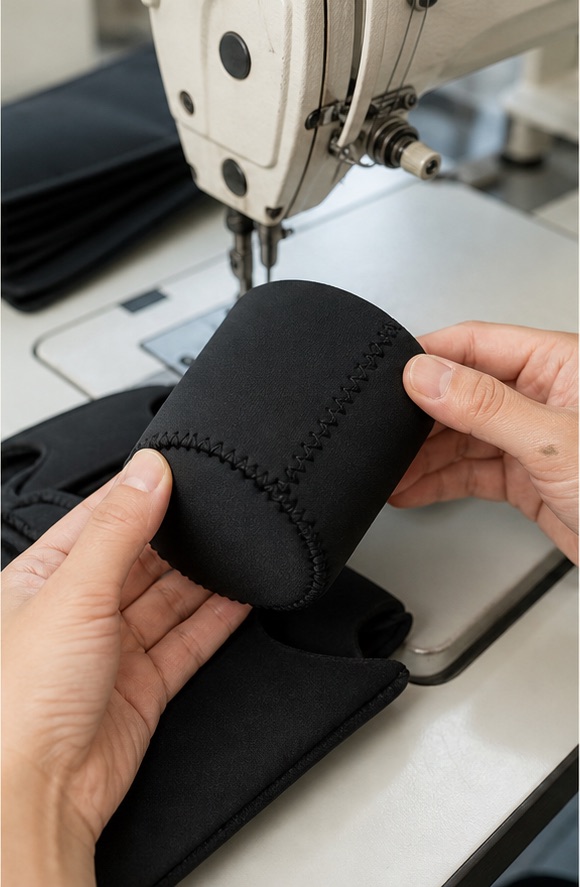
Separate unknowns from requirements
A buyer does not need to know every technical answer before enquiring. Mark each field as required, preferred, open to recommendation, or unknown. For example: “Full-color artwork is required; thickness is open to recommendation; cup dimensions will follow; individual packaging is preferred but not final.” That is more useful than selecting arbitrary options simply to complete a form.
Step 3: understand what MOQ really means
MOQ may be quoted per order, product, material color, size, or design. These are not equivalent. An order for 1,000 pieces split across ten designs can involve more setup than a single 1,000-piece design. Ask the supplier to state the minimum and price break for each variant combination.
EDIOM SPORTS currently presents a starting MOQ of 100 pieces per design and per size for the featured Coffee Sleeve product, subject to material, printing, construction, and packaging. That is a product-specific starting point, not a universal promise for every sleeve. A magnetic structure, special zipper, custom lamination, retail box, or unusual component can require a different minimum.
Why low MOQ can have a high development cost
Pattern work, artwork preparation, screen setup, material sourcing, color changes, sample sewing, and communication occur even when the unit quantity is small. A low-MOQ quotation may therefore include separate sampling or setup fees. Compare total project cost and what is included, not only the unit price.
Step 4: evaluate the supplier before the sample
A polished website is a starting signal, not complete verification. Ask focused questions that reveal whether the supplier understands the product:
- Which container dimensions are required, and how is negative ease determined?
- Which material face is used for the proposed print method?
- Is the quoted MOQ per design and size?
- What sample will be produced: existing quality sample, digital mockup, printed material proof, or full pre-production sample?
- Which details are subcontracted, if any, and who controls final inspection?
- How are artwork revisions and approved samples identified?
- What packaging and carton assumptions are included?
- What information is needed to confirm production and delivery lead time?
Good answers are specific to your brief. Be cautious when every question receives the same generic assurance. The supplier should identify unknowns, explain trade-offs, and avoid promising exact performance without a defined test.
Step 5: select the right kind of sample
| Sample type | What it can approve | What it cannot approve |
|---|---|---|
| Existing quality sample | General material, sewing, structure, and supplier workmanship | Your exact fit, artwork, color, and packaging |
| Digital artwork mockup | Approximate layout, orientation, and content | Physical color, hand feel, fit, print behaviour |
| Printed material proof | Artwork reproduction and approximate color on the selected face | Complete seam placement, fit, and finished construction |
| Full pre-production sample | Combined fit, material, print, construction, and practical appearance | Bulk consistency unless inspection criteria are also defined |
Ask what the sample fee and courier fee include, whether the sample is made by the intended production process, and whether approval changes the quoted lead time. If the supplier must substitute a sample material or process, the difference should be documented rather than hidden behind the word “sample.”
Step 6: approve the sample with a written checklist
“Looks good” is not an auditable approval. Record the sample date and revision, then inspect:
- fit on the exact target container, including repeated insertion and removal;
- finished dimensions and agreed tolerance method;
- material thickness, face, color, flexibility, odor expectation, and surface condition;
- artwork scale, position, orientation, seam crossing, spelling, and barcode readability where relevant;
- color under agreed viewing conditions;
- side seam, base seam, binding, zipper, handle, strap, magnet, or other component;
- print stretch, rub, adhesion, and recovery appropriate to the intended use;
- individual packaging, inserts, labels, carton marking, and packing quantity.
If the sample is approved with corrections, list the corrections and require a revised confirmation. Do not allow an email thread containing several conflicting comments to become the only production specification.
Step 7: define bulk quality before production
Quality control cannot be added effectively after the goods are complete. Translate the approved sample into inspection criteria. Identify critical, major, and minor defects relevant to the project. Examples include wrong product or artwork, unsafe exposed component, unusable fit, open seam, severe print error, contamination, noticeable color inconsistency, missing packaging, or cosmetic variation.
Agree how dimensions will be measured, how many units will be inspected, which defects are unacceptable, and who makes the release decision. For higher-risk orders, use an independent pre-shipment inspection or buyer-appointed inspection service. The appropriate sampling plan depends on order value, product risk, customer requirement, and contractual terms.
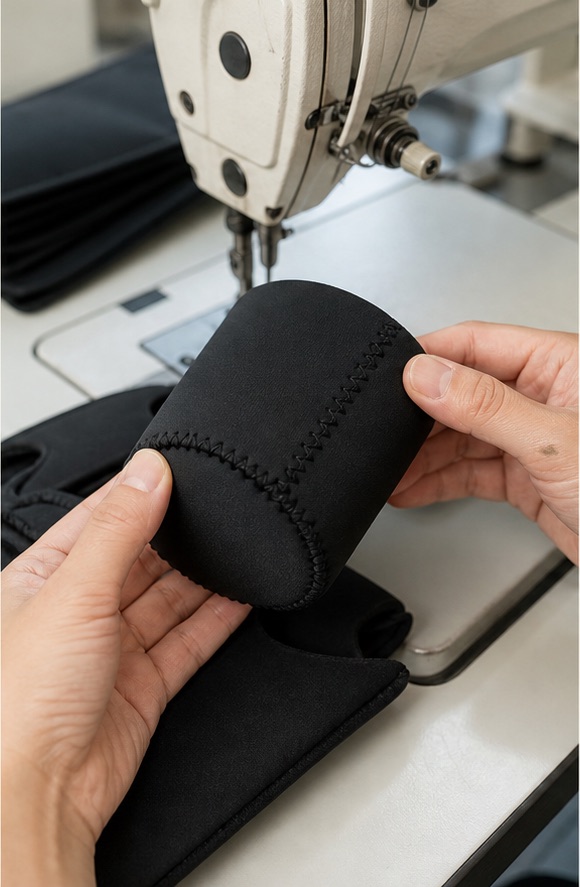
Inspection points specific to neoprene sleeves
- consistent lamination without obvious bubbling or separation;
- stable thickness and face fabric across the approved lot;
- cut edges and stitch density suitable for the structure;
- side and bottom seams without skipped stitches, loose ends, or excessive distortion;
- fit that remains consistent across sampled units;
- print free from major ghosting, misregistration, pinholes, or unintended transfer;
- accessories securely placed and oriented;
- clean, dry, correctly counted packing.
Step 8: build a realistic timeline
Lead time has several clocks: enquiry clarification, quotation, artwork preparation, material sourcing, sample production, sample courier, buyer review, correction, bulk scheduling, printing, cutting, sewing, finishing, inspection, packing, export handling, and transit. “Production lead time” may describe only one part of that chain.
Work backward from the required delivery date. Add time for sample shipping and buyer approval, especially when teams are in different countries. Confirm whether the supplier’s estimate starts after deposit, final artwork, sample approval, material arrival, or all of those conditions. Account for public holidays, peak seasons, customs, and the risk of air freight becoming the only recovery option.
Do not approve a delivery promise without the final variant count
Ten designs, multiple sizes, individual barcodes, or retail boxes can extend preparation and packing even when the total quantity looks modest. Provide the complete SKU matrix before asking for the confirmed schedule.
Step 9: specify packaging and export details
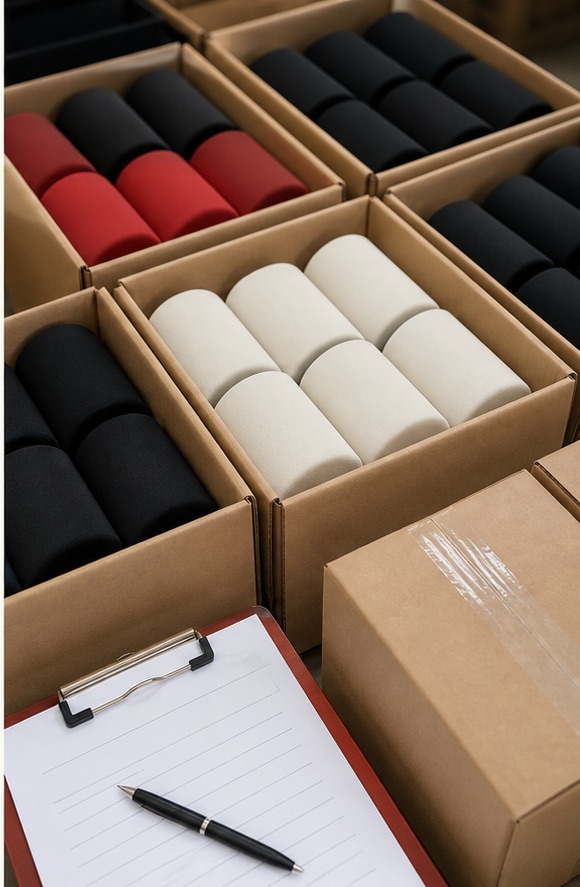
Neoprene sleeves are flexible, but packaging still affects creasing, moisture exposure, presentation, carton volume, and freight. Decide whether sleeves can be compressed or must retain a retail-ready shape. Confirm individual bag material, warning text where required, insert card, barcode position, carton strength, moisture protection, carton marks, gross-weight limit, and units per carton.
Request final packing dimensions before selecting freight. A thicker sleeve, handle, sewn base, or retail box can change cubic volume significantly. The lowest factory unit price may not produce the lowest landed cost if the product packs inefficiently.
Step 10: compare total landed risk, not only unit price
Create a comparison table with unit price, tooling or setup, sample cost, packaging, domestic handling, freight estimate, duties/taxes responsibility, payment terms, lead-time definition, inspection, defect remedy, and communication quality. Make assumptions visible. A quotation that excludes individual packaging cannot be compared directly with one that includes it.
Also price the cost of failure. A late event order, incorrect barcode, poor fit, or inconsistent brand color can cost more than the original goods. Supplier selection should reflect the consequence of the product failing its job.
Red flags during sourcing
- The supplier quotes immediately without asking for container, size, design count, print coverage, or packaging.
- MOQ is unclear about design, color, and size splits.
- Every material is described only as “high quality” without a construction specification.
- A digital mockup is presented as proof of final color or fit.
- The supplier will not identify what changes between sample and bulk process.
- Lead time has no start condition or excludes artwork and sample approval.
- The quotation does not state packaging or trade terms.
- Corrections are accepted casually but never consolidated into a revised approval document.
A practical purchase-order attachment
Attach a controlled specification rather than relying on the short purchase-order description. Include supplier and buyer references, product drawing, approved sample ID, material, finished dimensions, print file and revision, color references, construction, accessories, quantity by SKU, packaging, carton marks, inspection criteria, delivery term, destination, and approved deviations. Both sides should know which document wins if messages conflict.
Use a supplier scorecard before awarding the order
A scorecard makes the decision more transparent than comparing quotation totals alone. Weight the criteria according to the project. A time-sensitive brand launch may give delivery planning and communication more weight; a retail program may prioritize color control, packaging, and repeatability. Suggested categories include technical understanding, sample accuracy, quotation completeness, response quality, quality-control plan, capacity and schedule credibility, packaging knowledge, commercial terms, and corrective-action process.
Score evidence, not sales language. “Fast delivery” is not evidence; a milestone schedule with start conditions is. “Strict quality control” is not evidence; an inspection checklist linked to the approved sample is. “Any size available” is not evidence; a pattern proposal based on the target container is. Record unresolved questions next to the score so a high total cannot hide one critical risk.
The cheapest supplier may still win if the specification is straightforward and the evidence is strong. A higher quotation may be better value when it includes representative sampling, clearer packaging, realistic freight data, or a more credible remedy process. The purpose of the scorecard is not to produce a mathematically perfect answer. It is to expose assumptions before the deposit is paid.
Close the loop after delivery
Once the shipment arrives, compare receiving results with the approved sample and inspection report. Record carton condition, count discrepancies, fit feedback, print consistency, packaging performance, and any customer-service issue. Separate isolated handling damage from a repeatable product defect. Share evidence promptly and agree corrective action in writing.
For a repeat order, update the controlled specification instead of relying on memory. Note approved improvements, new artwork revisions, material changes, actual carton data, and the lead time achieved. Retain a reference sample when practical. This turns the first order into useful production knowledge and reduces the chance that the next team reopens decisions that were already tested.
Final recommendation
The most efficient sourcing process is not the one with the fewest questions. It is the one that resolves the important questions before they become bulk defects. Start with the commercial job and actual container, create one comparable specification, understand the MOQ by variant, approve a representative physical sample, define inspection, and build packaging and delivery into the quotation.
A capable supplier should make the project clearer as it progresses. By the time bulk production starts, both sides should be working from the same product, artwork, sample, packaging, and timeline—not from assumptions hidden inside a price sheet.
Methodology and editorial disclosure
This article was prepared from EDIOM SPORTS’ custom-order workflow and recurring buyer questions about quotation, sampling, printing, quality, packaging, and delivery. It is intended to help buyers structure an enquiry; it is not legal advice, a universal inspection standard, or a guarantee of project-specific lead time. All specifications and remedies must be confirmed in the applicable transaction documents. The three supporting visuals are AI-generated illustrations and are not photographs of a named customer order or evidence of a particular inspection result.